See receptor binding instead of guessing
Bundled complexes such as ibuprofen in COX-2 show the ligand in its pocket together with the contacts to the surrounding amino acids, plus an in-house scoring function for docking runs.
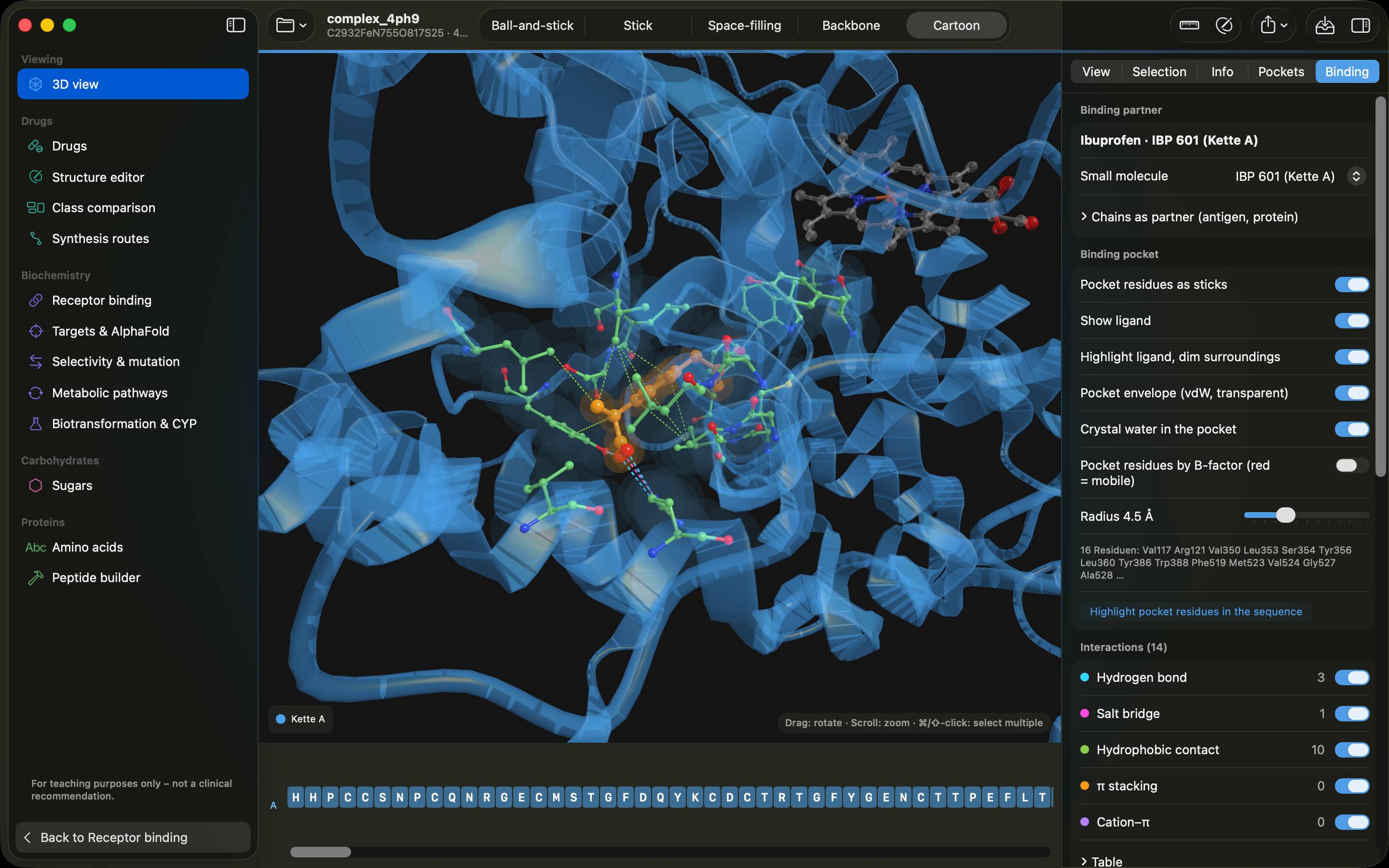
Ligandarium shows on your Mac why a drug works the way it does: from the molecule through the binding pocket to the pharmaceutical context. Built for pharmacy students, not for structural biologists.
Download for macOSFor macOS, in preparation
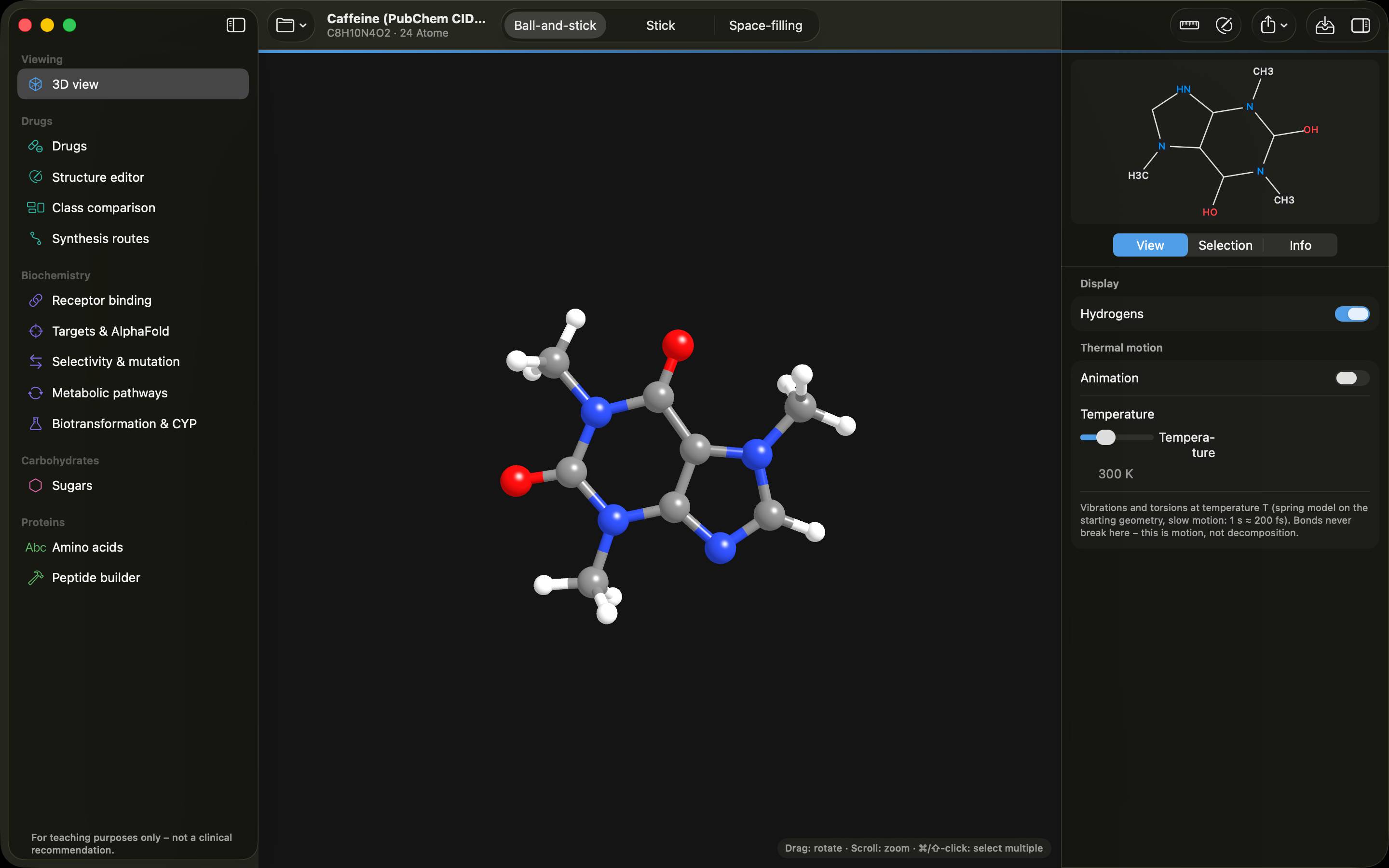
Most tools show either structure or data. Ligandarium links both into a chain you can walk in either direction — every view connects to the next.
Bundled complexes such as ibuprofen in COX-2 show the ligand in its pocket together with the contacts to the surrounding amino acids, plus an in-house scoring function for docking runs.
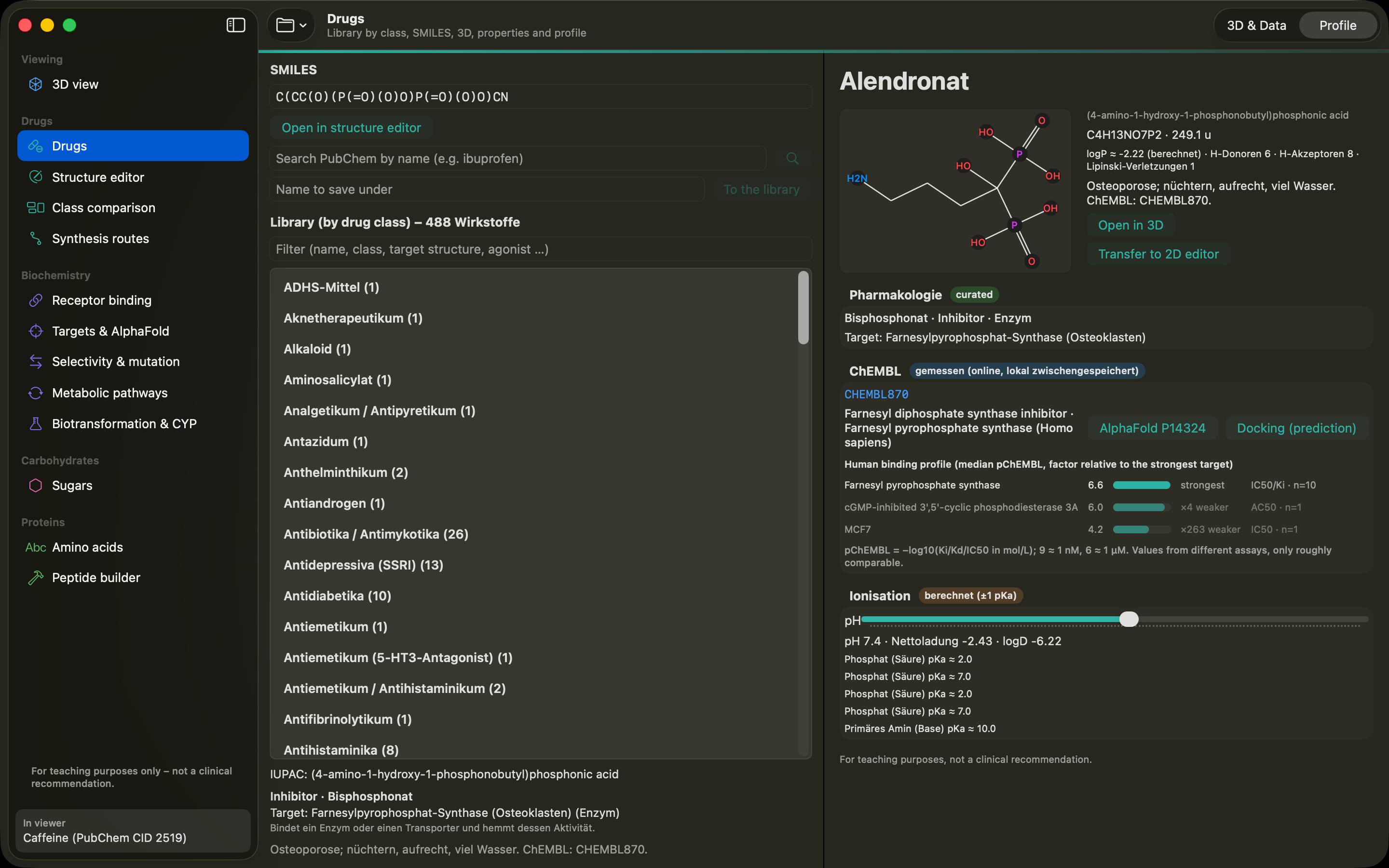
Around 400 drugs with mode of action, target and ATC code, including the Austrian list. Calculated ionisation and logD across the pH range, read off a slider.
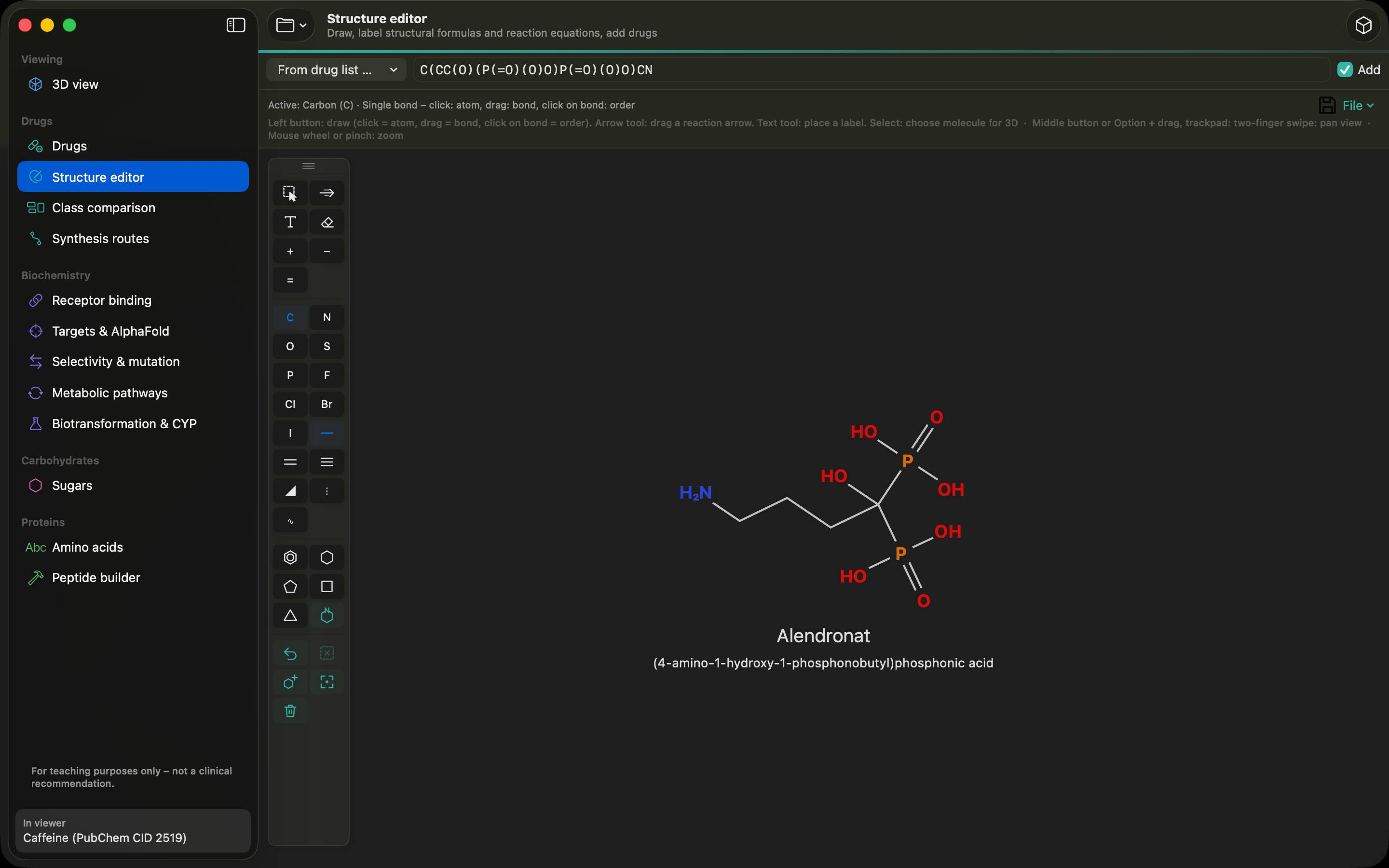
Draw and label structural formulas and reaction equations in the editor, then reuse them as your own compounds. Export to SDF, PDB and XYZ.
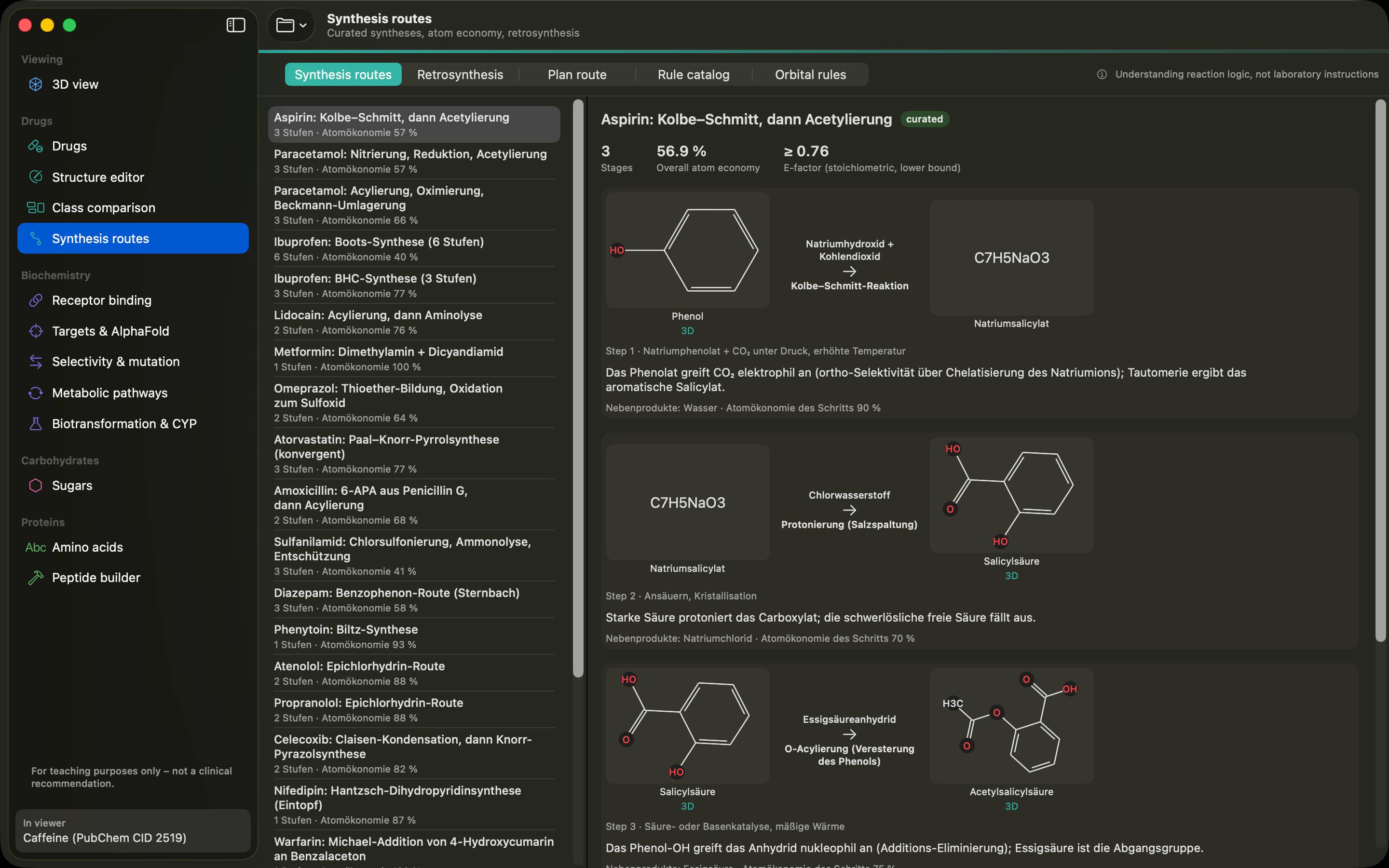
Curated standard syntheses step by step, atom economy per stage, and a retrosynthesis planner that proposes disconnections.
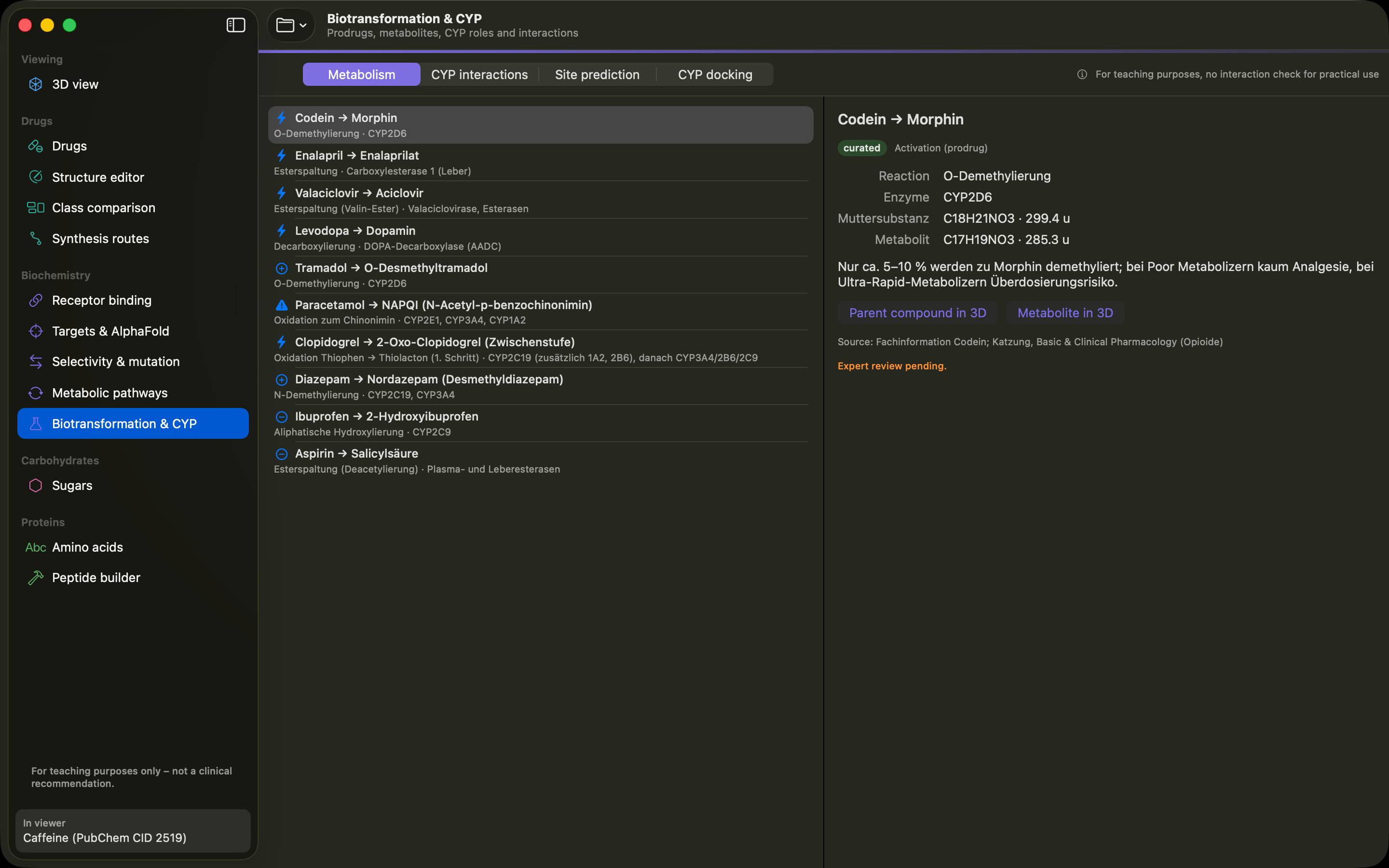
Prodrug, metabolite and degradation route in context: which CYP isoform is involved and where interactions arise. The source of every CYP statement stays visible.
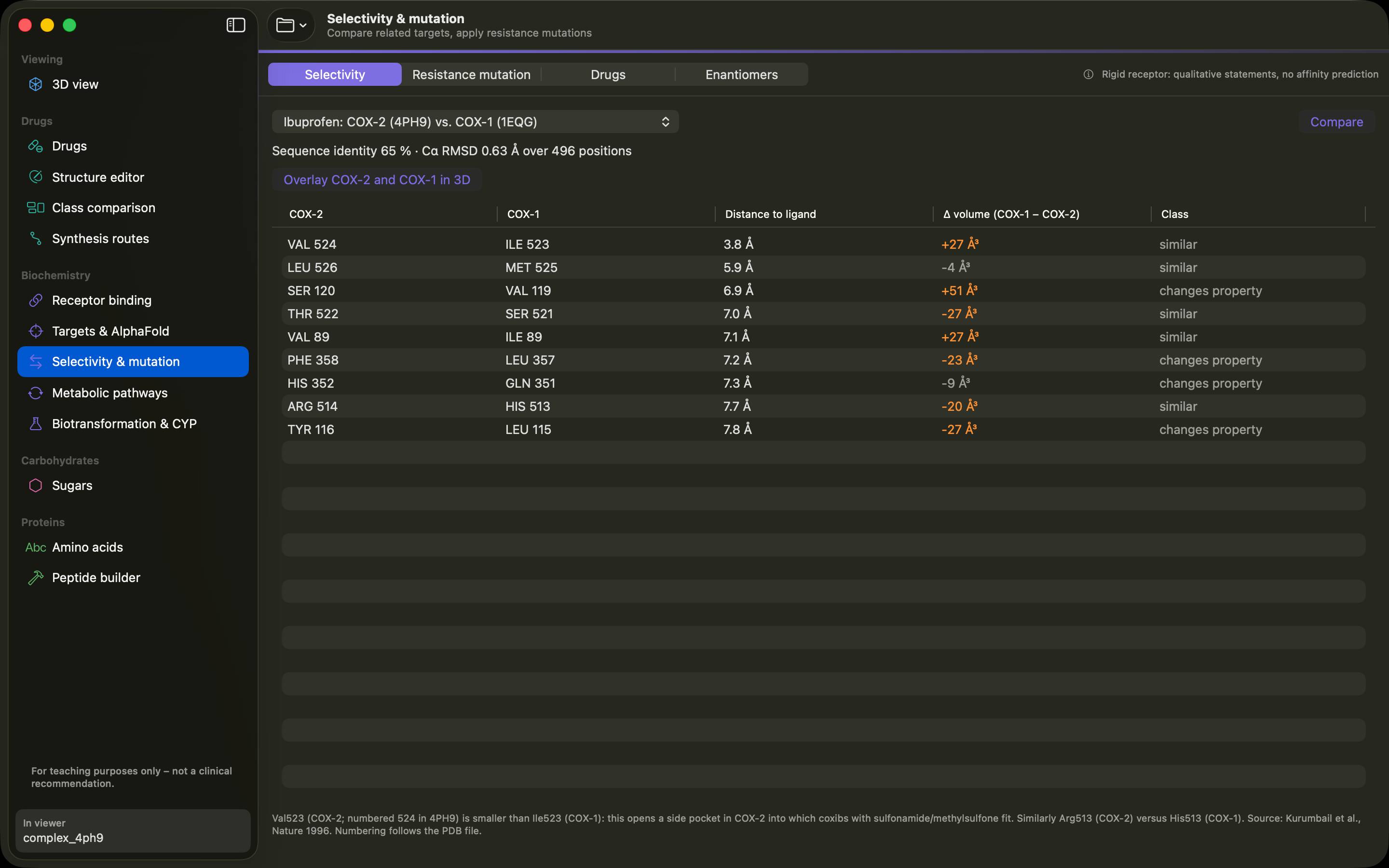
Compare related targets side by side and place resistance mutations into the pocket to see what changes in the binding picture.
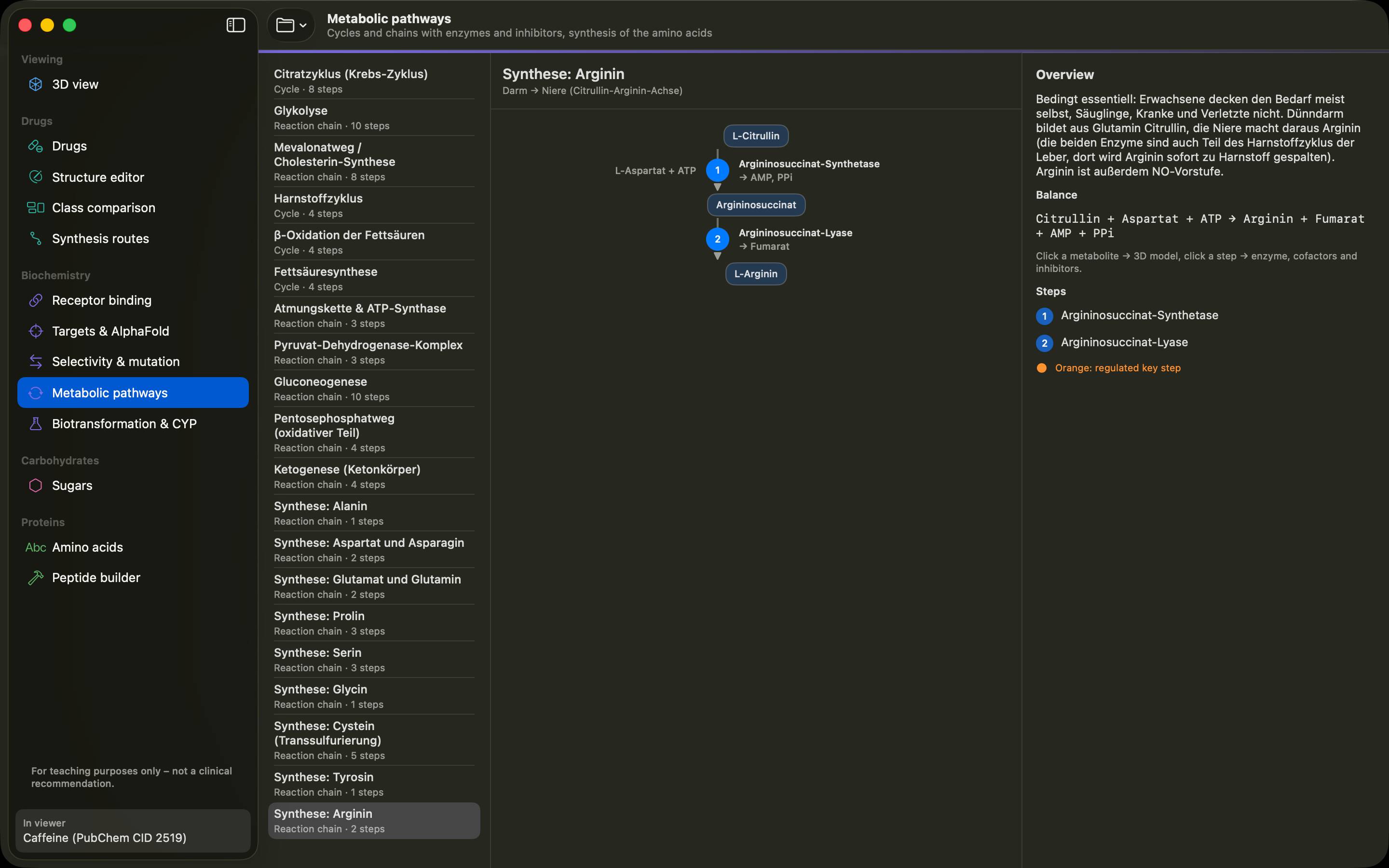
Cycles and chains with their enzymes and inhibitors, from glycolysis to amino acid synthesis — the way into the chain from disease to drug.
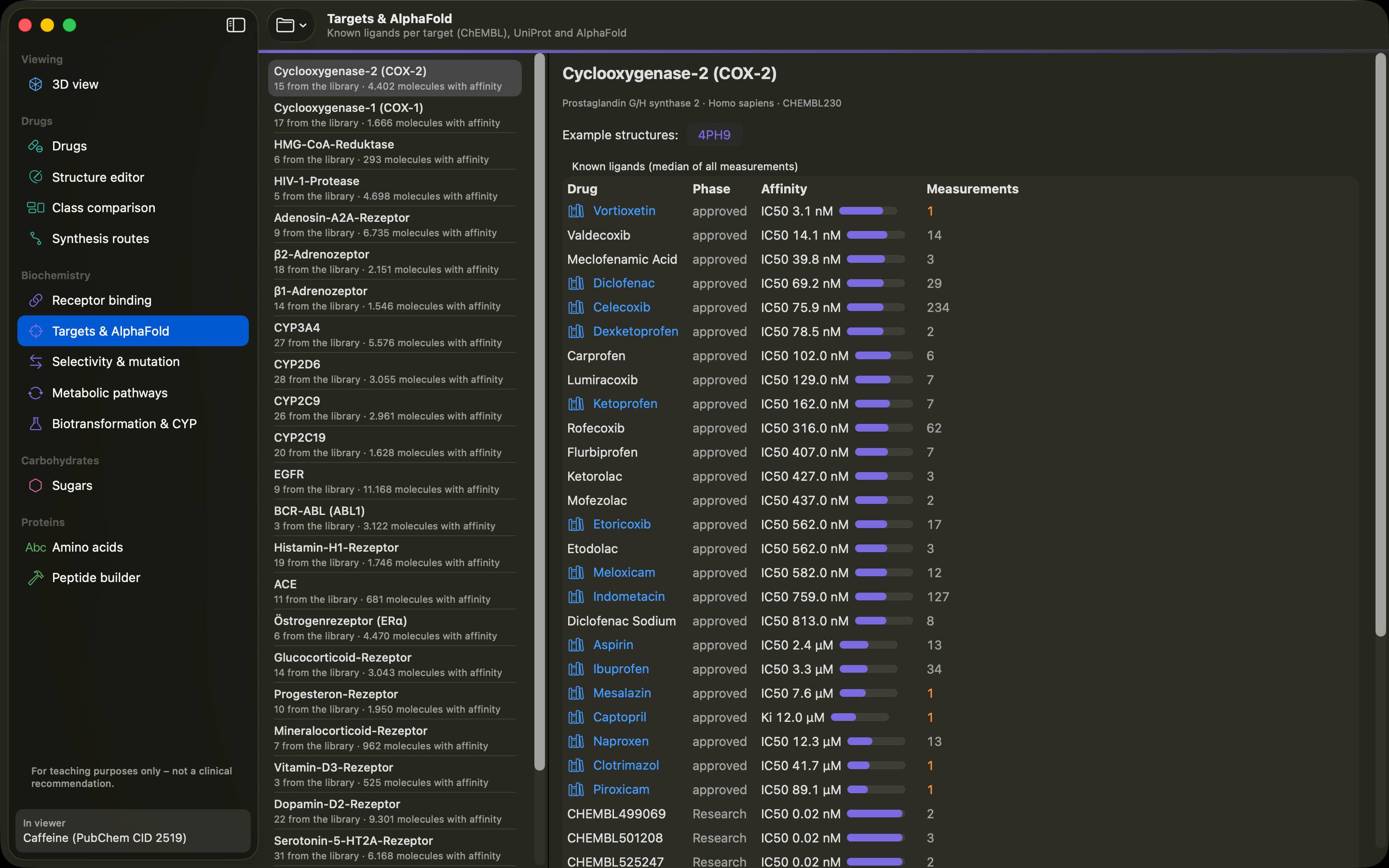
For every target the known ligands from ChEMBL with affinity and number of measurements, plus UniProt and the AlphaFold structure where no experimental one exists.
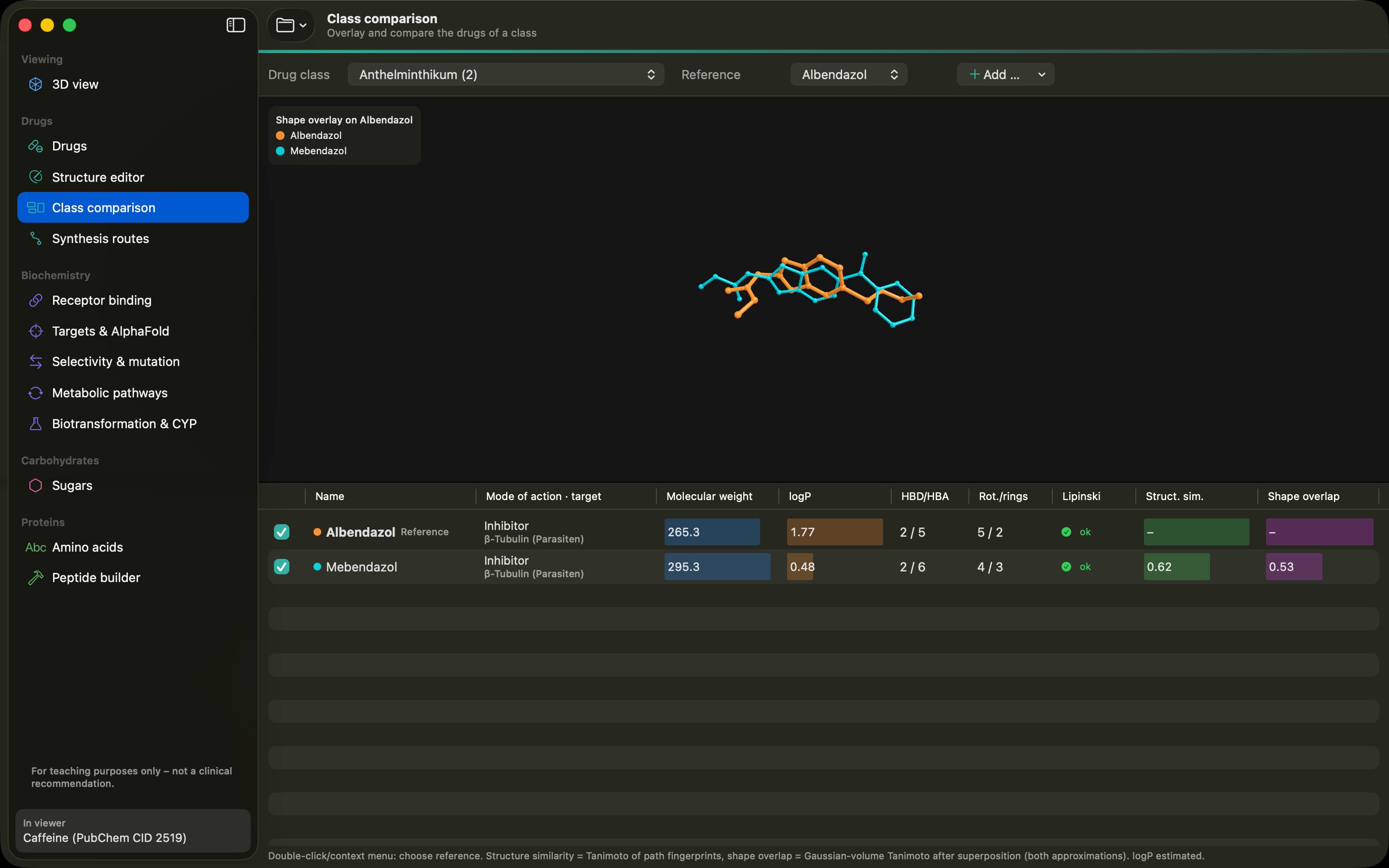
Superimpose the members of a class and separate the shared scaffold from the differences — the fastest route to understanding a substance class.
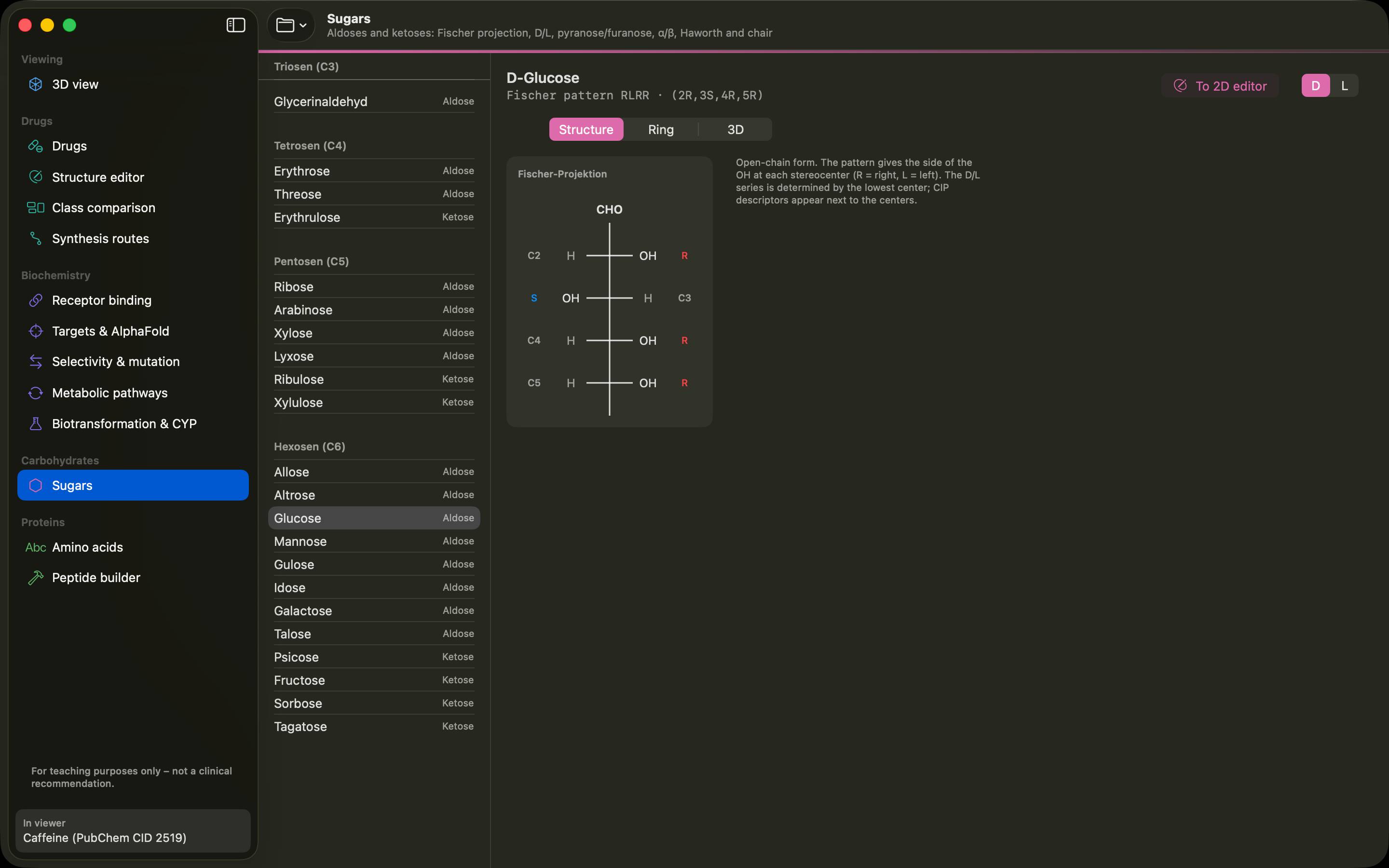
Aldoses and ketoses as Fischer projection, Haworth and chair, with D/L, pyranose and furanose as well as α and β — switchable on the same structure.
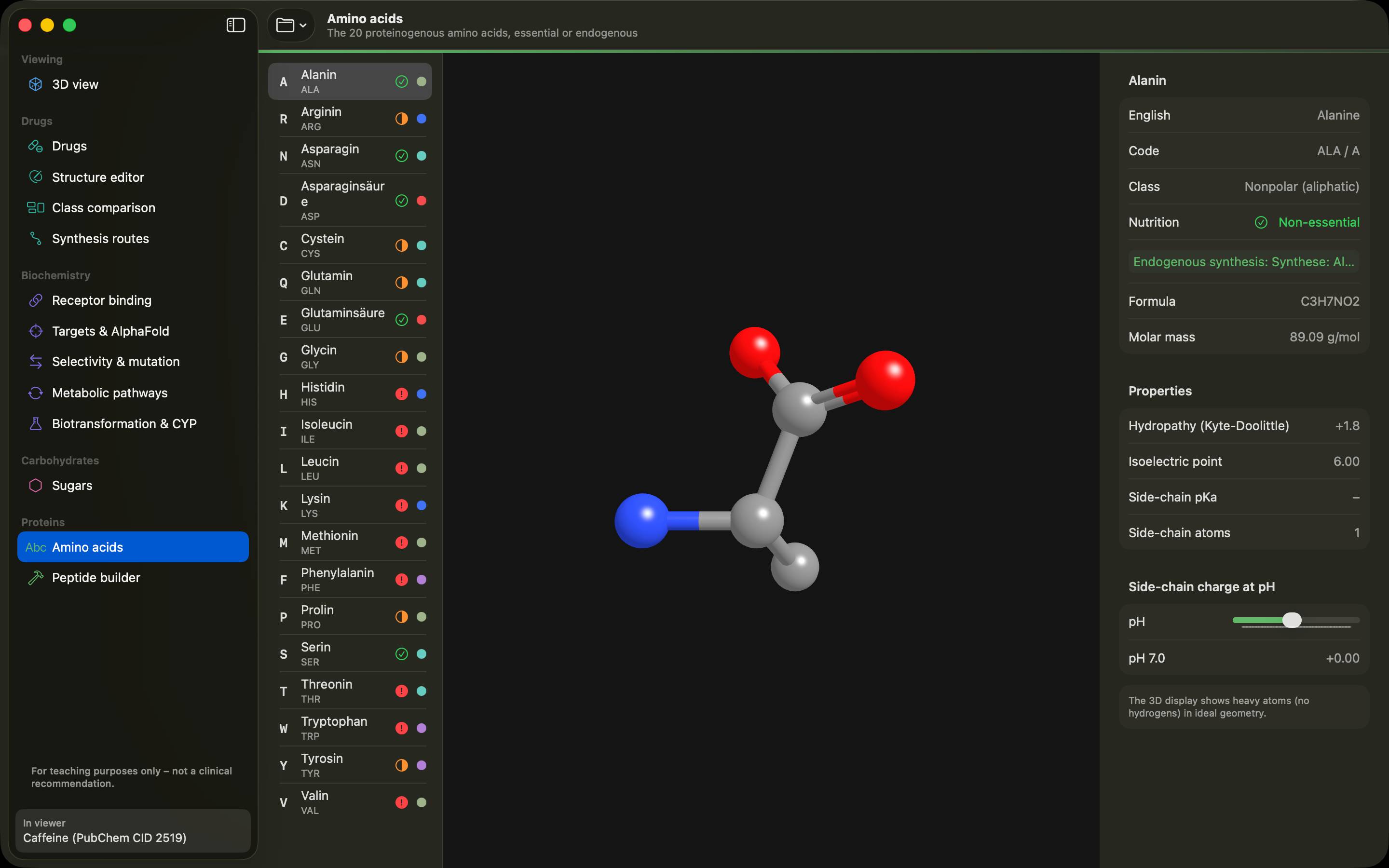
Each amino acid with code, class, formula, hydropathy, isoelectric point and the side-chain charge at the chosen pH — essential or endogenous at a glance.
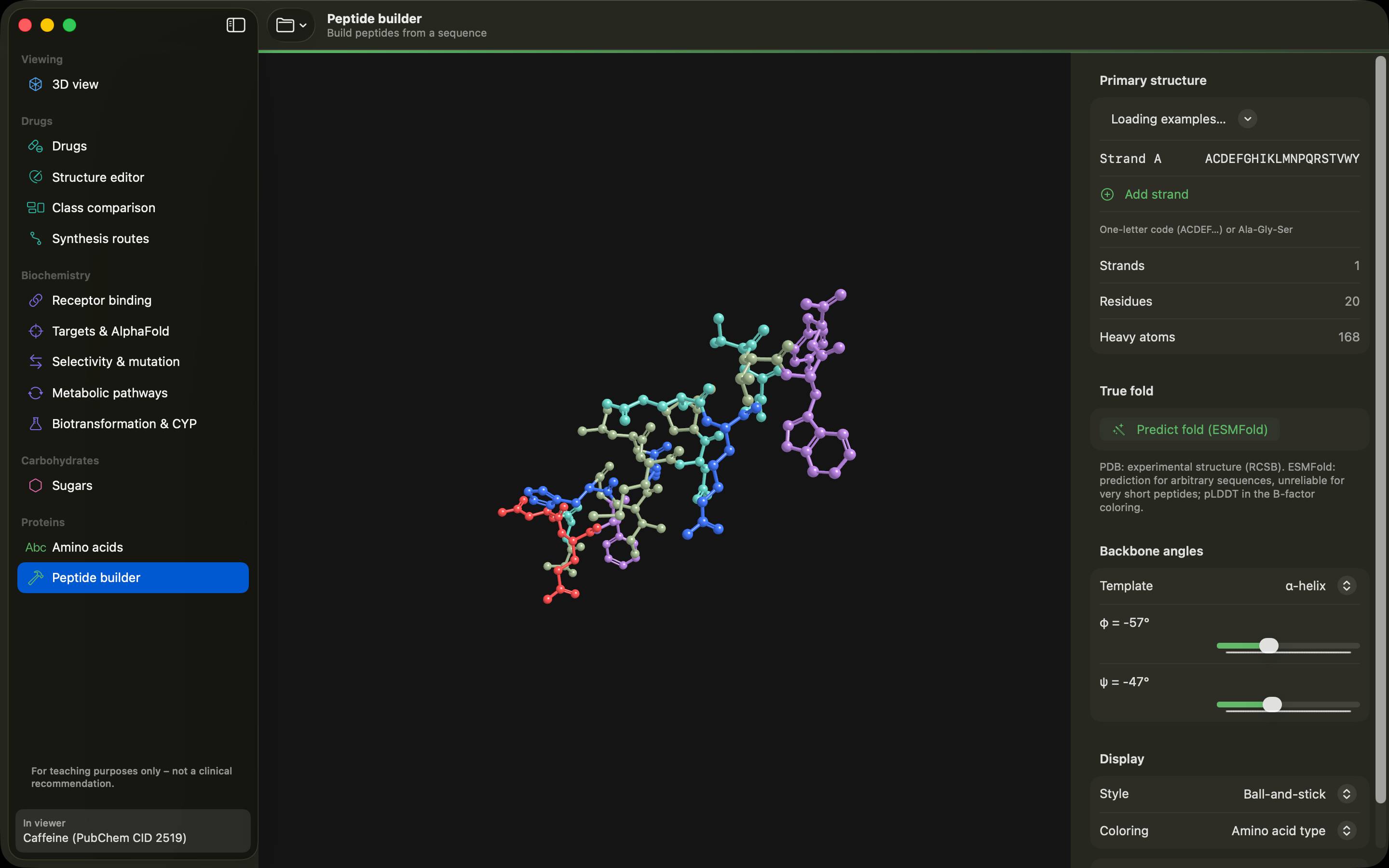
Enter a sequence and build it as a 3D structure, with backbone angles, multiple strands and optional fold prediction via ESMFold.
Terms, examples and defaults follow the pharmacy curriculum: pharmaceutical chemistry, pharmacology, biochemistry. German and English, with INN and ATC.
Every feature comes with at least one curated case and its source. Nothing to set up, and the app runs without an internet connection.
Import of PDB, CIF, SDF and SMILES, measuring and export. Connects to ChEMBL, UniProt and AlphaFold when a connection is available.
Docking scores, pKa values, logD and retrosynthesis proposals are approximations and are marked as such inside the app. Ligandarium replaces neither a clinical interaction check nor the primary literature. Structure data names its origin; the contact lines shown are calculated geometry, not an observed binding event.